
Role in the trailer workflow
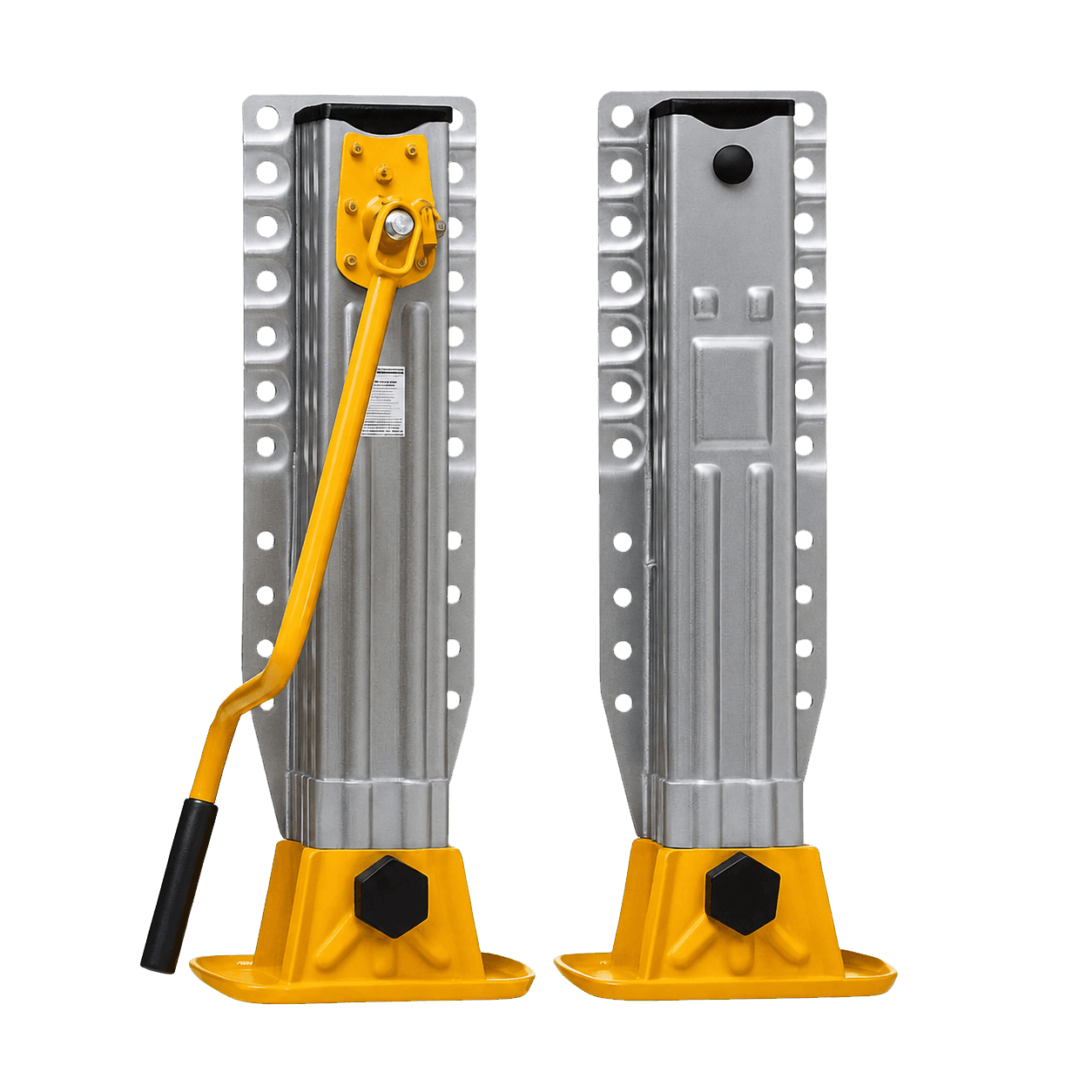
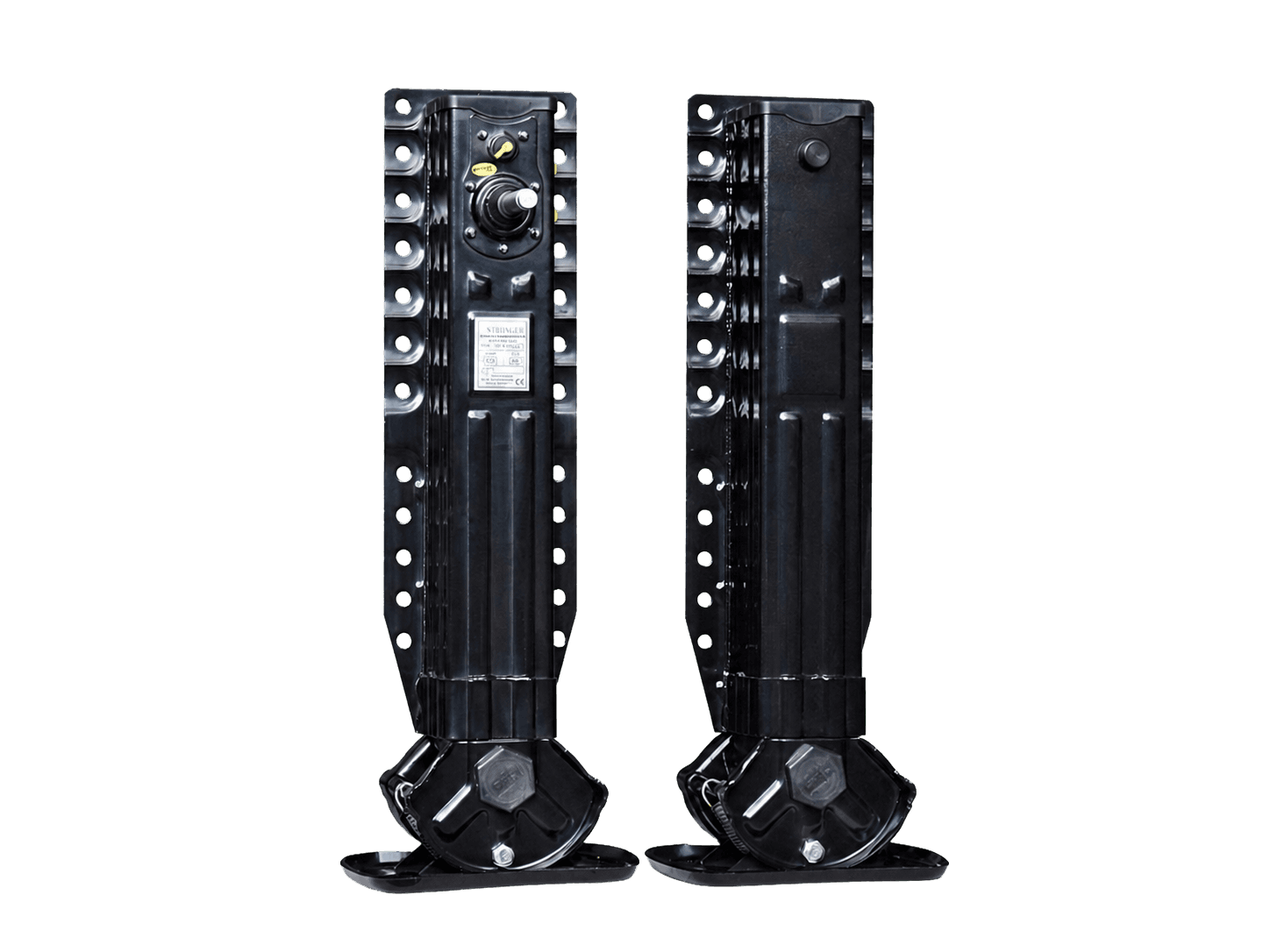
A landing jack provides a support point when a trailer is parked without the towing vehicle or when the trailer is being prepared for loading and unloading. In these situations, the component forms part of the trailer’s ground-support arrangement and must be used according to the vehicle builder’s design and operating procedures. The T-MAX 850T is intended for this type of trailer support rather than as a general-purpose lifting device.
The flat-base configuration is relevant where the trailer frame and mounting area are arranged to accommodate this form of support. Its accessible control layout can also be considered when planning routine operation, provided that the final position leaves adequate access for the operator and does not interfere with adjacent trailer equipment. These points should be reviewed at the design stage rather than treated as an afterthought during fitting.
Selection and compatibility checks
Before specifying the T-MAX 850T, identify the trailer type, chassis arrangement and intended mounting location. Check the available space around the landing-jack position, including the relationship with the chassis, suspension components, landing gear structure, side guards, storage equipment and any bodywork. The flat-base arrangement must suit the local structure and the way the trailer transfers support forces to the ground.
Product selection should also reflect the application: trailer parking, loading or unloading preparation, new trailer manufacture, or a refurbishment project. The available product information does not establish universal compatibility with every trailer design. Confirm the vehicle, chassis, mounting position and application with the technical team before placing an order, especially where the component is being used as a replacement or incorporated into a modified structure.
Installation planning and inspection
Installation should follow the trailer manufacturer’s engineering instructions and the approved mounting design. The mounting area needs to be checked for structural suitability, clearance and access before the jack is positioned. The installer should also confirm that operation does not create contact with moving parts or restrict access to other service points. Any required fixing method, reinforcement or installation detail should be defined by the responsible vehicle designer or technical team rather than assumed from the product name.
After fitting, inspect the complete installation as part of the trailer build or repair process. Check that the jack is correctly located, securely attached according to the approved design and able to be operated without avoidable obstruction. A functional check should be carried out under the workshop’s established safety procedure, using the trailer manufacturer’s instructions and site risk controls. Do not infer a lifting capacity or permitted load from the product code alone; those values must be confirmed for the specific application.
Maintenance-oriented observations
Routine care begins with keeping the landing-jack area accessible and observing its condition during scheduled trailer inspections. Look for visible damage, deformation, loose or displaced mounting components, unusual operating resistance and contamination that could affect movement or access. The surrounding chassis and support structure should be inspected at the same time, since the jack and its mounting point operate as part of the wider trailer assembly.
Maintenance intervals and lubrication requirements should be taken from the applicable equipment documentation or the vehicle manufacturer’s service procedure. If operation changes, the jack becomes difficult to control, or the mounting area shows signs of damage, remove the trailer from normal use as appropriate to the site procedure and arrange a competent inspection. Replacement decisions should consider the original mounting arrangement and the trailer’s current condition, not only the external appearance of the old component.
Preparing a precise enquiry
A useful enquiry should include the product code, T-MAX 850T, together with the trailer or truck application and whether the request concerns a new build, replacement or refurbishment. Provide the trailer type, chassis details, intended mounting side or position, available installation space and photographs or drawings of the relevant area where possible. This information allows the technical team to assess the proposed use more accurately than a product name alone.
Also state how the jack will be used: parked-trailer support, loading and unloading preparation, or another defined workshop application. If the component will replace an existing jack, include its current identification and mounting details, while avoiding assumptions that the replacement is automatically interchangeable. Ask the technical team to verify vehicle compatibility, structural integration and the applicable operating requirements before procurement or installation.