
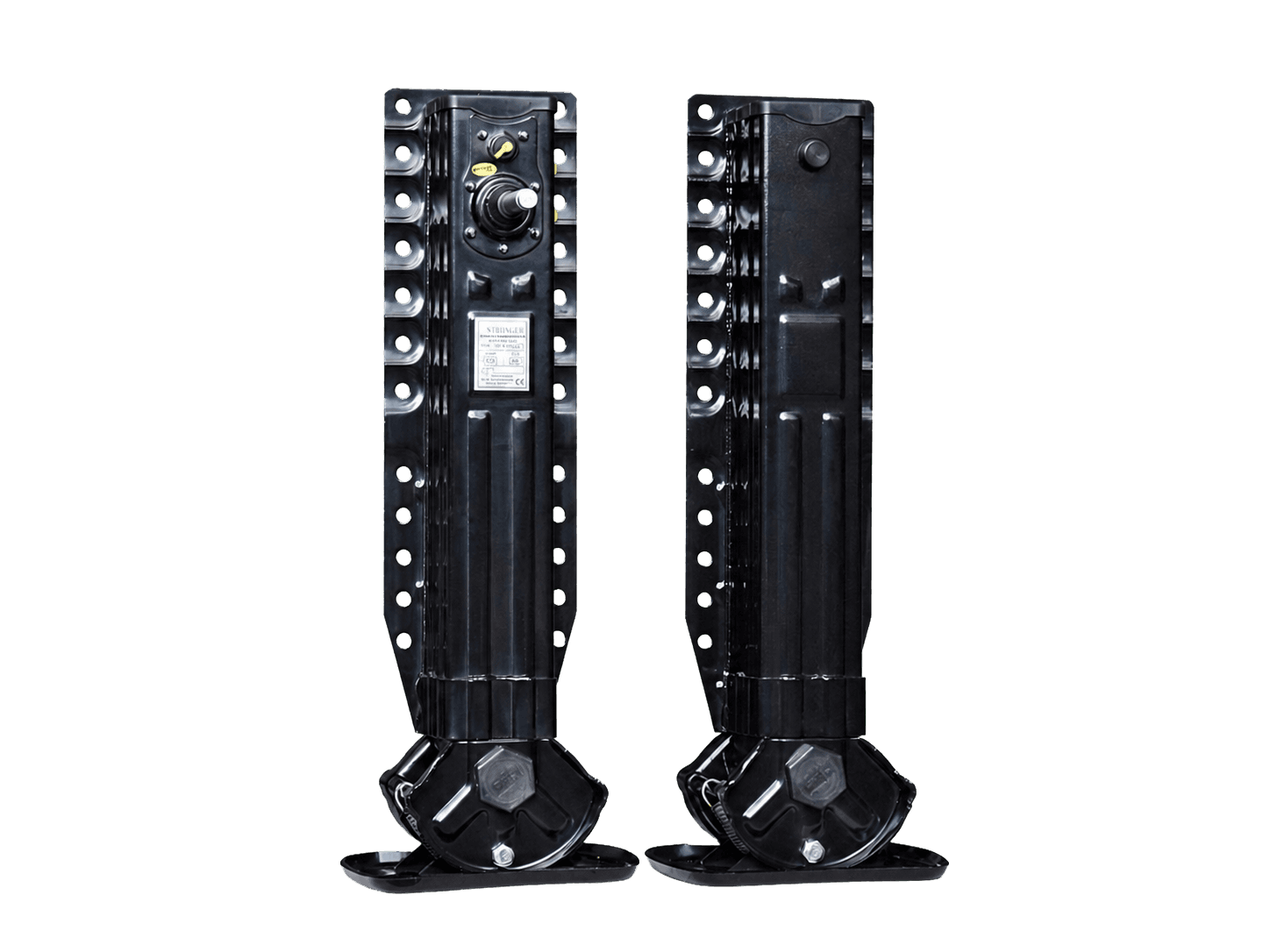
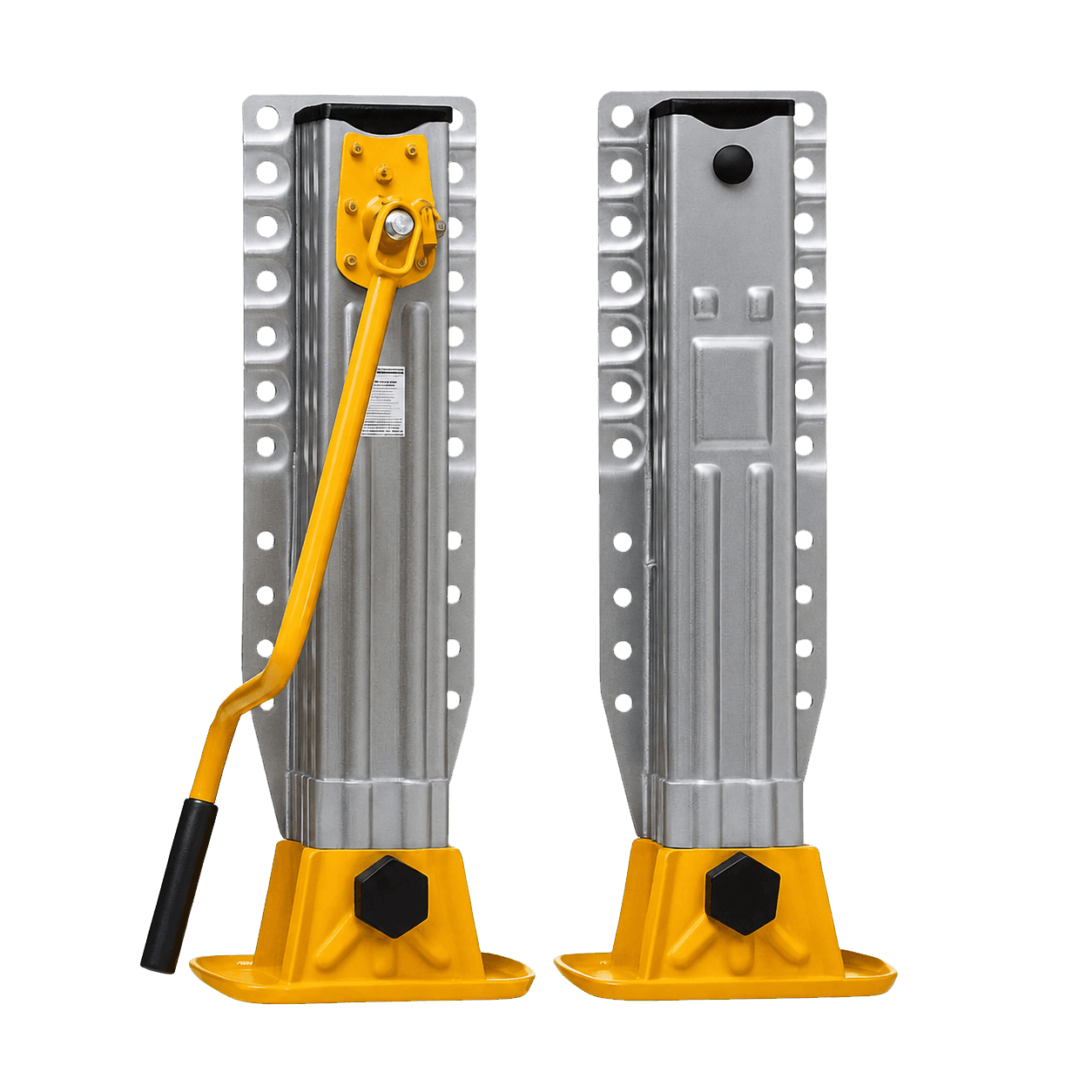
What the T-MAX 650S is designed to do
A trailer jack provides controlled support when a trailer is uncoupled or needs to remain stable during operational preparation. The T-MAX 650S is intended for these support duties rather than being treated as a substitute for a complete vehicle lifting or workshop support system. Its use should always follow the operating procedure defined for the trailer and the site.
The product is specified with a lifting capacity of 25 tonnes and a static load rating of 50 tonnes. These values must be considered together with the actual load distribution, ground condition, trailer configuration and the number and arrangement of jacks in the application. They should not be used to approve an installation without checking the complete chassis design.
Where it fits in trailer operations
In a typical workflow, the jack is used after the trailer has been positioned and before loading, unloading or other work that requires the uncoupled trailer to remain supported. It can also be considered during new trailer production, chassis integration and replacement of existing landing-gear equipment. The spring-base arrangement is particularly relevant when the mounting and support concept calls for this type of foot configuration.
The accessible control layout can help operators reach the operating point during routine positioning, but practical access depends on the trailer frame, side guards, body equipment and surrounding clearance. Before selection, confirm that the intended operating area remains reachable with the trailer in its normal parked configuration and that the handle movement will not conflict with adjacent components.
Selection and compatibility checks
The T-MAX 650S has a weight of 90 kg per set. This should be included in the trailer mass calculation and considered when planning handling during assembly or replacement. The mounting position, chassis geometry, available reinforcement and load paths require project-specific review; the product code alone does not establish compatibility with a particular trailer or truck chassis.
A precise technical review should confirm the vehicle or trailer model, chassis section, mounting location, required ground clearance and the intended operating loads. Also verify whether the spring-base arrangement suits the support surface and the trailer’s normal duty cycle. If any of these details are uncertain, the vehicle builder, workshop or procurement team should obtain confirmation from the technical team before ordering.
Operating characteristics and installation context
The lifting screw offers two operating rates. In heavy-duty mode, one handle revolution produces 1.0 mm of lifting travel and the stated handle effort is 17 kg. In fast mode, one revolution produces 10.6 mm of travel and the stated handle effort is 35 kg. These figures describe the specified operating characteristics; they do not define a universal installation method or guarantee a particular cycle time in service.
Installation should be carried out against the approved trailer design, with the jack aligned to the intended load path and secured using the specified mounting arrangement. After fitting, check that the body, spring base and control mechanism have adequate clearance through the expected range of movement. A functional check should be performed without placing personnel beneath an inadequately supported trailer, and the site’s lifting and isolation procedures should be followed.
Inspection, maintenance and enquiry preparation
Routine attention should focus on conditions that can affect safe support: deformation around the mounting area, unusual movement, damage to the spring-base assembly, contamination of moving parts and changes in operating effort. Keep the mechanism clean enough for inspection and follow the applicable maintenance instructions for lubrication and service intervals. Any defect that affects alignment, travel or support should be assessed before continued use.
For a useful enquiry, provide the trailer type, chassis details, mounting position, required quantity, operating environment and whether the request concerns new production, retrofit or replacement. Include the expected support duty and any dimensional drawings or photographs available. Refer to T-MAX 650S by its exact code and ask the technical team to verify mounting, vehicle compatibility and application suitability before the purchase is finalised.