
Role in the trailer workflow
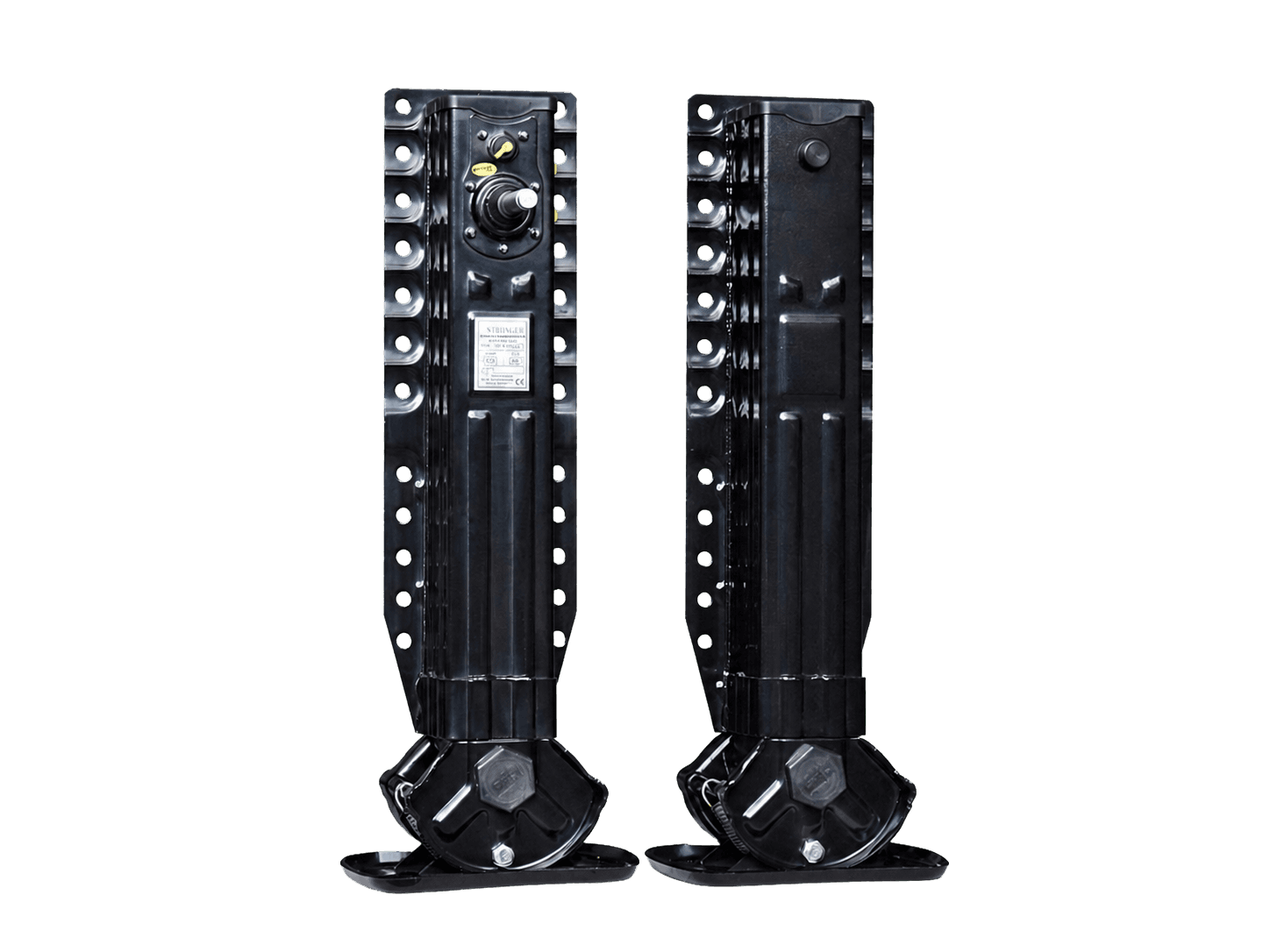
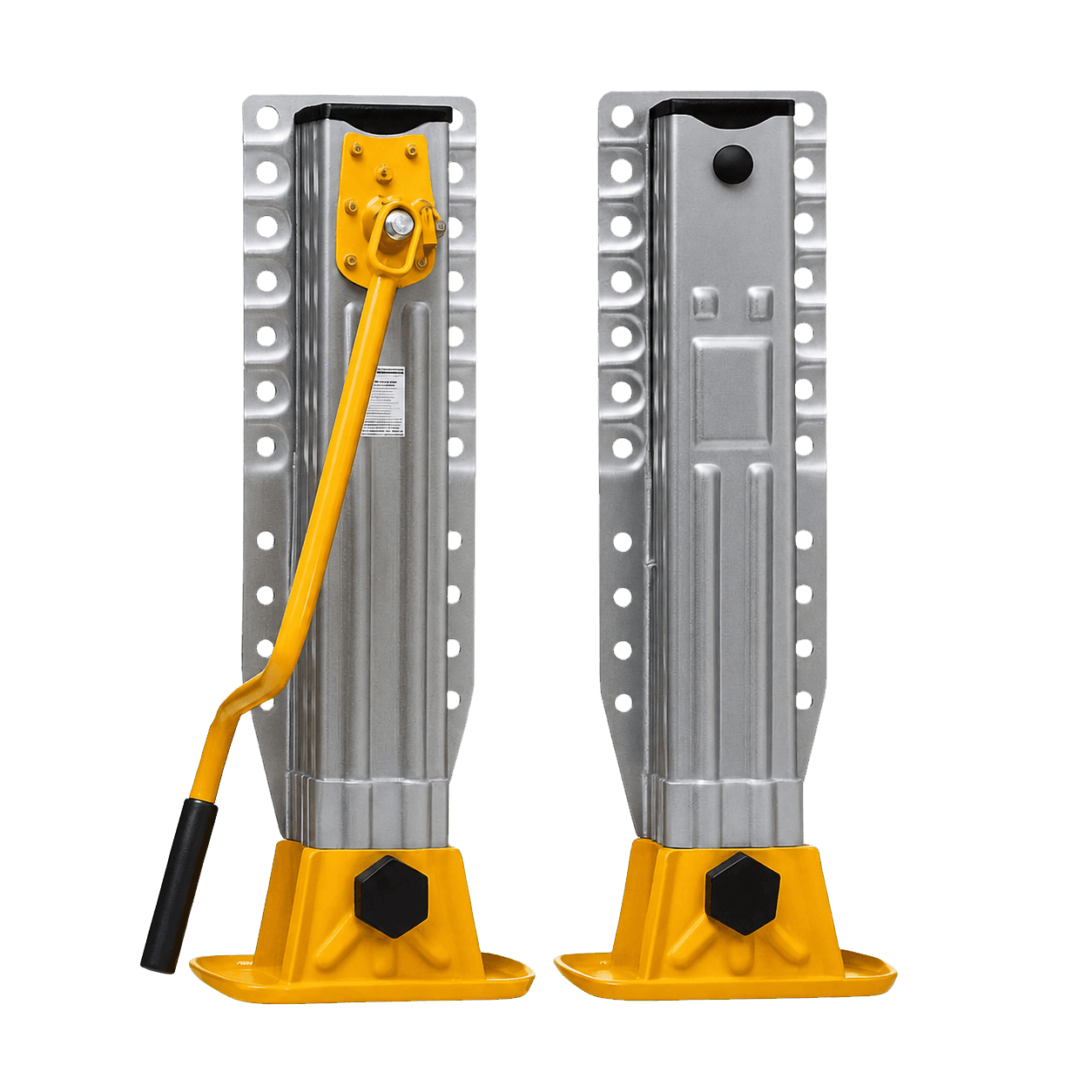
A trailer landing jack supports the front or designated support area when the trailer is disconnected or being prepared for a loading operation. The T-MAX 750S is therefore considered within the complete trailer support system rather than as an isolated lifting component. Its use may be relevant to trailer production, refurbishment and fleet maintenance projects, subject to the vehicle design and application.
The jack can form part of the workflow between parking, coupling or uncoupling, and loading or unloading preparation. The spring-base arrangement should be assessed together with the trailer frame, support geometry and ground conditions. The jack should not be selected solely by nominal capacity; the complete support arrangement and the way loads are transferred through the chassis also require technical review.
Capacity and operating data
The stated lifting capacity of the T-MAX 750S is 25 tonnes, while its stated static loading value is 50 tonnes. These figures must be considered in the context of the complete installation, load distribution, operating position and the instructions applicable to the vehicle. They should not be treated as permission to exceed the limits of the trailer, chassis, mounting structure or other support equipment.
For one set, the stated weight is 90 kg. The lifting handle travel per turn is 1.0 mm in heavy-speed operation and 10.6 mm in fast-speed operation. The stated effort required to turn the handle is 17 kg in heavy-speed operation and 35 kg in fast-speed operation. These values can help workshops and vehicle builders assess operating expectations, access and handling arrangements, but the final selection should be based on the actual project requirements.
Selection and compatibility checks
Before specifying the T-MAX 750S, confirm the trailer type, chassis design, intended mounting position and the support function required. The available space around the landing-gear area should be checked for structural clearance, handle access and interaction with nearby components. The spring-base design should also be reviewed against the movement and support conditions expected in the proposed application.
Compatibility cannot be confirmed from the product code alone. Procurement teams should provide the vehicle or trailer model, chassis drawings where available, mounting details, operating environment and whether the requirement concerns a new build or a replacement. If the existing jack is being renewed, compare the mounting arrangement and interface rather than assuming that a similar-looking component is interchangeable.
Installation and inspection context
Installation should be planned by qualified personnel in accordance with the trailer manufacturer’s design requirements and the applicable workshop procedures. Mounting surfaces, attachment points and clearances should be verified before the jack is fitted. The accessible control position is useful only when the final installation preserves safe and practical access without interference from the frame, bodywork or adjacent equipment.
After installation, inspect the mounting and operate the jack through its intended range without an imposed load to identify binding, restricted movement or contact with surrounding parts. A subsequent functional check should follow the vehicle builder’s procedure and the project’s risk controls. Any unusual resistance, misalignment or movement should be investigated before the trailer is returned to service.
Maintenance and preparing an enquiry
Maintenance planning should include regular visual inspection of the spring-base area, housing, handle, mounting points and surrounding structure. Look for looseness, deformation, corrosion, contamination or changes in operating resistance. The inspection interval and any lubrication or service procedure should be defined according to the equipment documentation and the operating conditions; no servicing assumption should replace the manufacturer’s instructions.
For a precise enquiry, provide the product code T-MAX 750S together with the trailer or chassis application, required mounting location, available clearances and whether the request is for a complete set or a replacement component. Include photographs, dimensional drawings and details of the current installation where possible. The technical team can then verify vehicle compatibility, structural interfaces and the suitability of the proposed arrangement before procurement or installation.